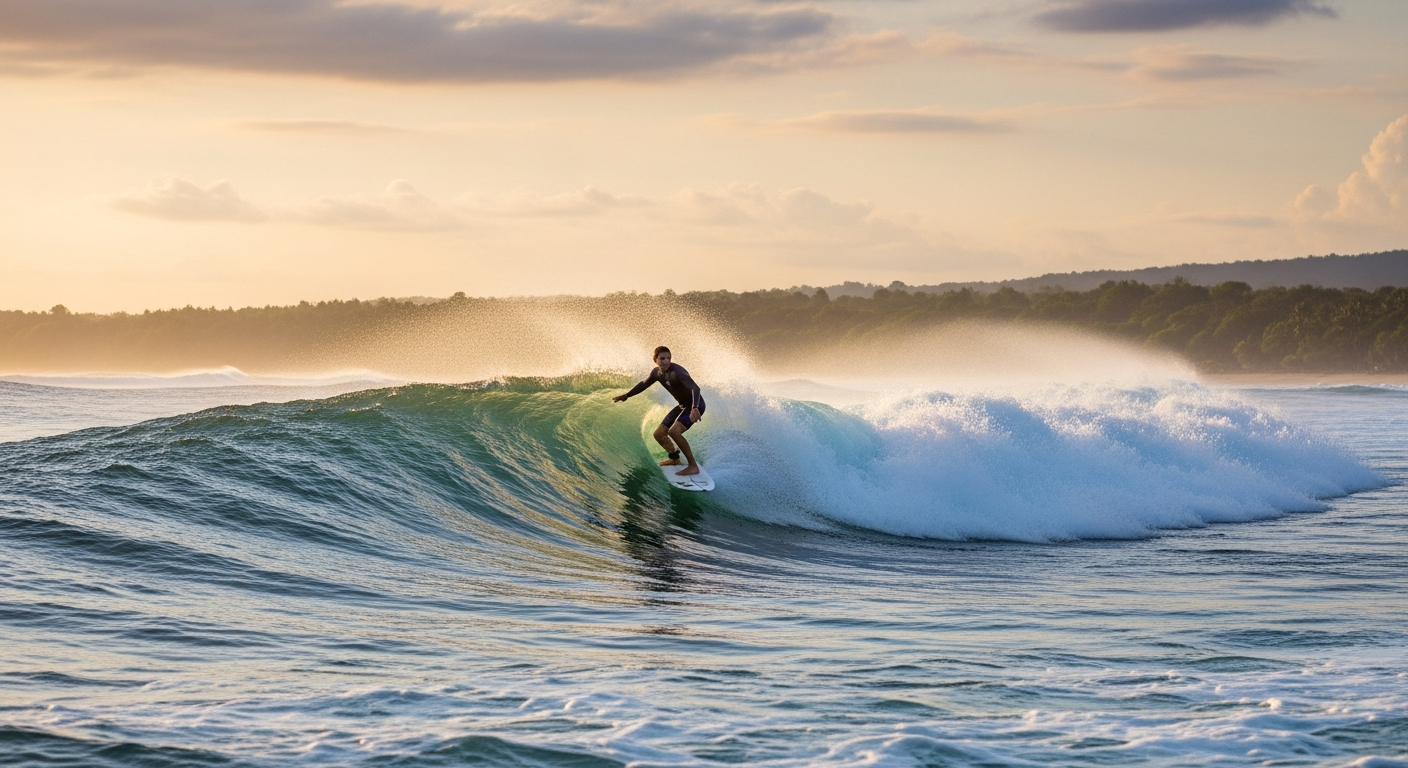
Key Takeaways
- Lakey Peak in Central Sumbawa is the main surf area, renowned for its consistent waves.
- Wet season (November–March) offers intermediate surfers smaller, manageable swells and fewer crowds.
- The ferry from Lombok to Poto Tano is affordable and accessible, followed by a 90-minute drive to Maluk.
- Yo-Yos offers a reliable right-hand reef break in West Sumbawa, ideal for intermediate skill levels.
Sumbawa offers intermediate surfers an exciting challenge during the wet season from November to March. While the dry season is renowned for its optimal surf conditions, the wet season can still provide rewarding surf experiences. With fewer crowds and consistent swells, intermediate surfers can enjoy a unique surfing adventure in Sumbawa’s diverse breaks.
Sumbawa’s Surf Overview
Located in Indonesia, Sumbawa is known for its powerful waves and striking coastlines. It’s a destination that has increasingly caught the attention of surfers worldwide, particularly at Lakey Peak in Central Sumbawa, which first put the island on the global surfing map. The dry season from May through September is known for its ideal surf conditions, yet the wet season, from November to March, presents its own set of opportunities.
During the wet season, the swells are generally less predictable but can be quite rewarding, especially for intermediate surfers looking to improve their skills. With less crowding in popular spots, surfers can enjoy more personalized sessions. The unique geographical layout of Sumbawa also allows for varied breaks that cater to different skill levels, making it an attractive destination even in the off-peak months.
The island’s rugged terrain and remote beaches offer a sense of adventure, with each surf spot providing a different experience. Whether famous Lakey Peak or exploring the relatively untouched coastlines, surfers will find that Sumbawa’s natural beauty adds to the allure of its waves.
Conditions During the Wet Season
The wet season in Sumbawa, running from November to March, brings more frequent rain and onshore winds. These conditions can lead to less predictable waves, but they also contribute to fewer crowds, which is a significant advantage. For intermediate surfers, this means having more room to practice without the pressure of busier lineups.
Despite the challenges posed by the wet season, the swells remain consistent. The presence of offshore winds makes morning sessions particularly appealing. This combination of elements provides intermediate surfers with the opportunity to experience different types of waves and improve their adaptability and technique.
The rain can transform the landscape, turning normally dry areas into lush, green havens. While this might mean facing rain showers during surf sessions, it also enhances the natural beauty of the island, making every trip to the beach an experience in itself. The wet season can also bring about different marine life sightings, adding another layer of excitement to the surf experience.
Prime Surf Spots for Intermediate Surfers
One of the most renowned spots in Sumbawa is Lakey Peak. Known for its powerful and consistent waves, Lakey Peak offers a challenging yet rewarding experience for intermediate surfers. The wave breaks both left and right, making it an ideal spot to hone skills in both directions. During the wet season, the wave size can vary, but the presence of fewer surfers allows for a more relaxed atmosphere.
In West Sumbawa, Yo-Yos, particularly “The Hook,” is another excellent spot. This right-hand reef break is consistent and offers wave sizes ranging from shoulder high to double overhead. The wet season’s offshore winds can create quality waves in the mornings, providing ideal conditions for intermediate surfers.
Tropical, a left-hand reef break, forms about 100 meters from the white-sand beach on the western shore of Sumbawa. It offers a more secluded experience with lineups of 2–10 people, making it perfect for those seeking solitude on the waves. The combination of consistent swells and fewer surfers ensures that intermediate surfers can catch plenty of waves without the usual competition found in more popular destinations.
Travel and Costs
Reaching Sumbawa involves a combination of transport methods. From Lombok, surfers can take a ferry from Port of Labuan Kayangan to Poto Tano in West Sumbawa. The ferry ride lasts approximately 1.5 hours and costs around $6 USD per person. From Poto Tano, the drive to key surfing locations, such as the town of Maluk in West Sumbawa, takes roughly 90 minutes.
Once in Sumbawa, a range of accommodation options is available. Kura Kura House, located in West Sumbawa, is a popular choice among surfers. It offers facilities such as a gym, pool, sauna, and unique jungle cabanas. Staying here provides easy access to some of the best breaks in the region.
Beyond surfing, travelers can explore the local culture and natural attractions. Visiting traditional Sumbawan villages or trekking through the lush hills during the wet season are great ways to engage oneself in the island’s rich heritage. These activities, combined with the affordable cost of living in Sumbawa, make it a budget-friendly destination for surf enthusiasts.
Local Culture and Surf Community
Sumbawa’s local culture is rich and diverse, contributing to the island’s unique surf experience. The locals are known for their hospitality, and the growing surf community is both welcoming and supportive. Intermediate surfers will find that the local surfers are willing to share tips and advice, enhancing the overall experience.
The surf culture in Sumbawa has grown significantly over the years, with a focus on sustainability and respect for the natural environment. Many surf camps and accommodations work closely with the local community to promote eco-friendly practices, ensuring that Sumbawa remains a surf-friendly environment for future generations.
Festivals and local events are also a part of Sumbawa’s lively culture. During the wet season, visitors might have the chance to experience traditional music and dance, which often accompany religious and cultural celebrations. These cultural experiences offer glimpses into the island’s history and traditions, providing a deeper connection to Sumbawa beyond its waves.
Adventure Beyond Surfing
While surfing is a major draw, Sumbawa offers numerous other adventures for those looking to explore the island further. The interior of Sumbawa is home to rugged landscapes and striking natural attractions that can be explored through hiking and guided tours. The island’s waterfalls, such as Mata Jitu Falls on Moyo Island, are particularly spectacular during the wet season when water flow is at its peak.
Diving and snorkeling in the waters around Sumbawa also provide opportunities to experience the rich marine biodiversity of the region. Sites like Satonda Island are renowned for their lively coral reefs and diverse marine life, making them a must-visit. These activities complement the surfing experience, offering a well-rounded adventure holiday.
Additionally, local markets and craft villages offer a taste of traditional Sumbawan life. Visitors can purchase handmade crafts, textiles, and local foods, supporting the local economy while bringing home a piece of Sumbawan culture. These experiences enrich the journey, ensuring that Sumbawa’s allure extends beyond its famous surf breaks.
Conclusion: Is Sumbawa Right for You?
For intermediate surfers considering Sumbawa during the wet season, the answer is a resounding yes. The challenges presented by the wet season conditions can be seen as opportunities for growth and skill enhancement. With fewer crowds and consistent swells, it’s an ideal setting for those looking to push their limits.
The combination of diverse surf spots, welcoming community, and the unique charm of Sumbawa makes it a worthwhile destination. Whether you’re seeking to perfect your technique or simply enjoy a different surfing environment, Sumbawa has plenty to offer in the wet season.
FAQs
Q? Is the wet season challenging for beginners? A: While the wet season can be challenging due to unpredictable conditions, intermediate surfers with some experience will find it rewarding. Beginners might struggle with the variable wave patterns, so it’s recommended to gain some experience before attempting Sumbawa in the wet season.
Q? Are there surf schools available in Sumbawa? A: Yes, several surf schools operate in Sumbawa, especially around Lakey Peak. These schools cater to all levels, offering lessons and guidance to help surfers navigate the waves and improve their skills during the wet season.
Q? What should I bring for a surfing trip during the wet season? A: It’s important to bring appropriate surf gear, including a board suited for variable conditions, a wetsuit for cooler water, and rash guards for protection. Additionally, rain gear and waterproof bags are recommended due to the increased rainfall during the wet season.
Planning something bigger across Indonesia? A recommended partner is rajaampatyachtcharter.
Explore all sumbawasurfing.com options and plan your trip.